On February 9, a commercial satellite passing over the Bohai Shipyard at Huludao photographed a submarine in a flooded drydock, and for a few days, the analysts who watch that yard assumed it was routine. Initial low-resolution imagery suggested just another Type 093B, the guided-missile boat China has been turning out at a steady clip. Then, sharper pictures and synthetic-aperture radar data arrived, and the assessment changed completely. The hull in the dock was the first Type 09V, also designated Type 095, China’s third-generation nuclear-powered attack submarine, caught at launch by open-source imagery before Beijing said a word. The boat itself matters. The yard that built it matters more, and together they tell the story of the fastest-rising nuclear submarine force on earth arriving at exactly the moment America’s own undersea enterprise is struggling to build and repair its boats.
February 9, 2026: The Type 095 Sui-Class Appears At Bohai
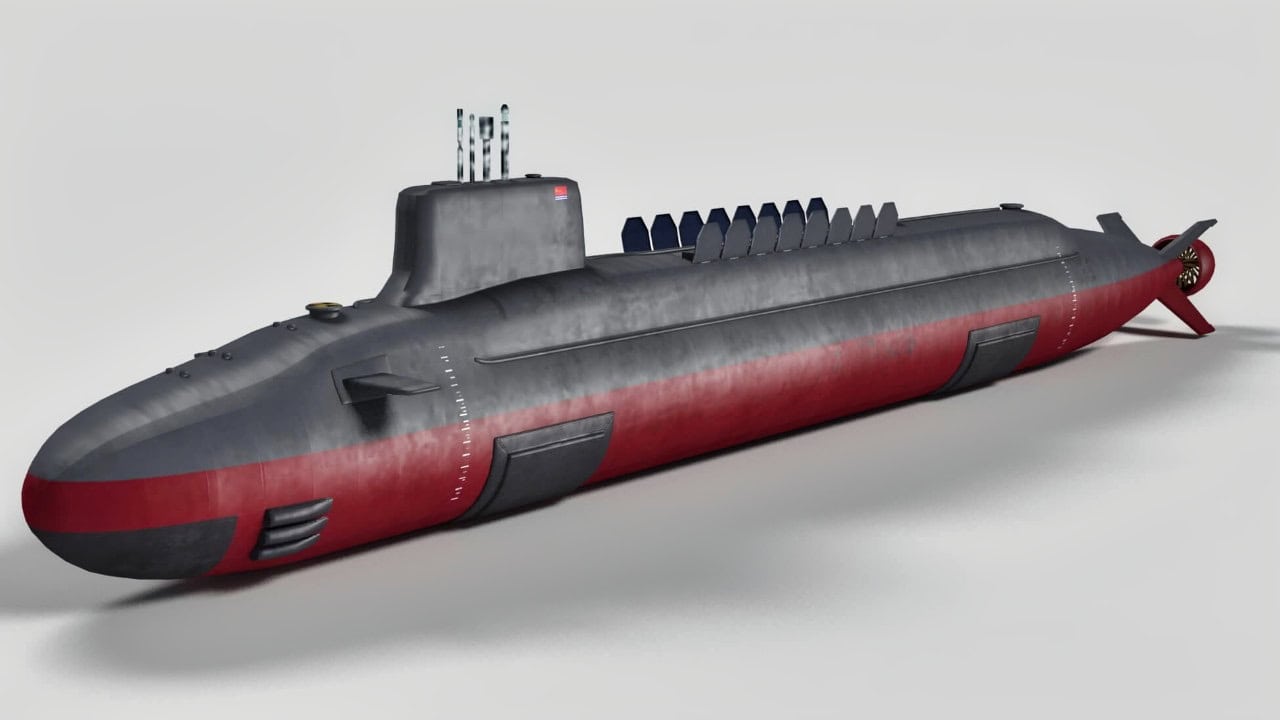
What the imagery shows is a submarine roughly 110 meters long with a beam approaching 12 meters, dimensions in the family of the existing Type 093 Shang class but with telling differences: a refined sail and hull shaping that analysts read as acoustic improvement and updated combat systems. The more consequential interpretation concerns what is under the waterline.
The design may mark China’s shift toward a hydrodynamically cleaner hull arrangement in the Western style, and the wider beam points beyond this boat entirely — the same analysis that broke the sighting concluded the coming Type 096 ballistic missile submarine will likely adapt a derivative of this baseline hull. One launch, in other words, previewed two classes: the attack submarine China will build next, and the strategic deterrent that will ride the same production line behind it.
SSBN China Submarine. Image Credit: Creative Commons.
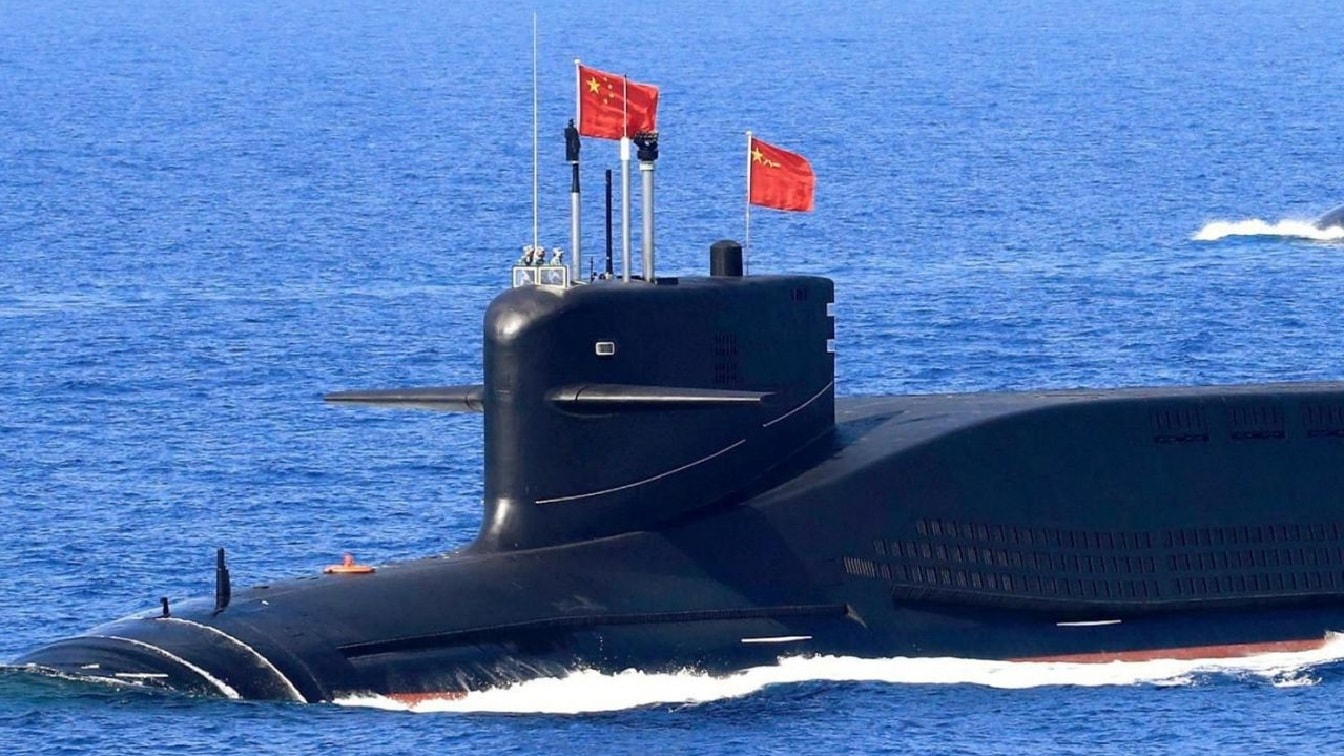
Chinese nuclear missile submarines. Image Credit: Creative Commons.
Caution belongs in the picture. Much about the boat remains speculative, from its sonar fit to its missile armament, and a first hull is years of trials away from a deployable capability. But the milestone is real: China has now put its next-generation attack submarine in the water, on a timeline most Western assessments did not expect this soon.
From Punchline To Second Place
The distance traveled deserves a moment, because within living memory, Chinese nuclear submarines were a professional joke. The first-generation Type 091 attack boats were so loud that American submarines tracked them across entire oceans, and US Navy intelligence assessments famously rated the Type 094 ballistic missile submarine as noisier than Soviet boats built in the 1970s.
For decades, the People’s Liberation Army Navy’s nuclear force was the weakest leg of its modernization, a handful of hulls that existed mostly to prove China could build them at all.
That era is over. Analysts now assess China’s nuclear-powered submarine fleet at approximately 32 active boats in 2026, a force that has pushed past Russia to make China the world’s second-largest nuclear submarine operator. The qualitative gap that long made raw counts irrelevant is narrowing alongside the quantitative one, which is precisely what the Type 095’s acoustic refinements signal. Second place still trails the United States by a wide margin. The trend line is the alarming part.
The Type 093B Surge: Seven Boats In Four Years
The engine of the climb is a single class built at a tempo no one else currently matches. Since 2022, Bohai has launched at least seven or eight Type 093B hulls, a rate of roughly two nuclear boats a year sustained across four years.
The 093B is not a coastal patrol asset. Displacing about 6,200 tonnes, it carries vertical-launch cells for YJ-18 anti-ship missiles and CJ-10 land-attack cruise missiles, with assessments putting the broader force in the mid-teens of hulls. The design philosophy is visible in the loadout: mass-produced platforms built for missile volume and salvo saturation, meant to put enough weapons in the air at once to stress the layered defenses of a carrier strike group or strike land targets across the region.
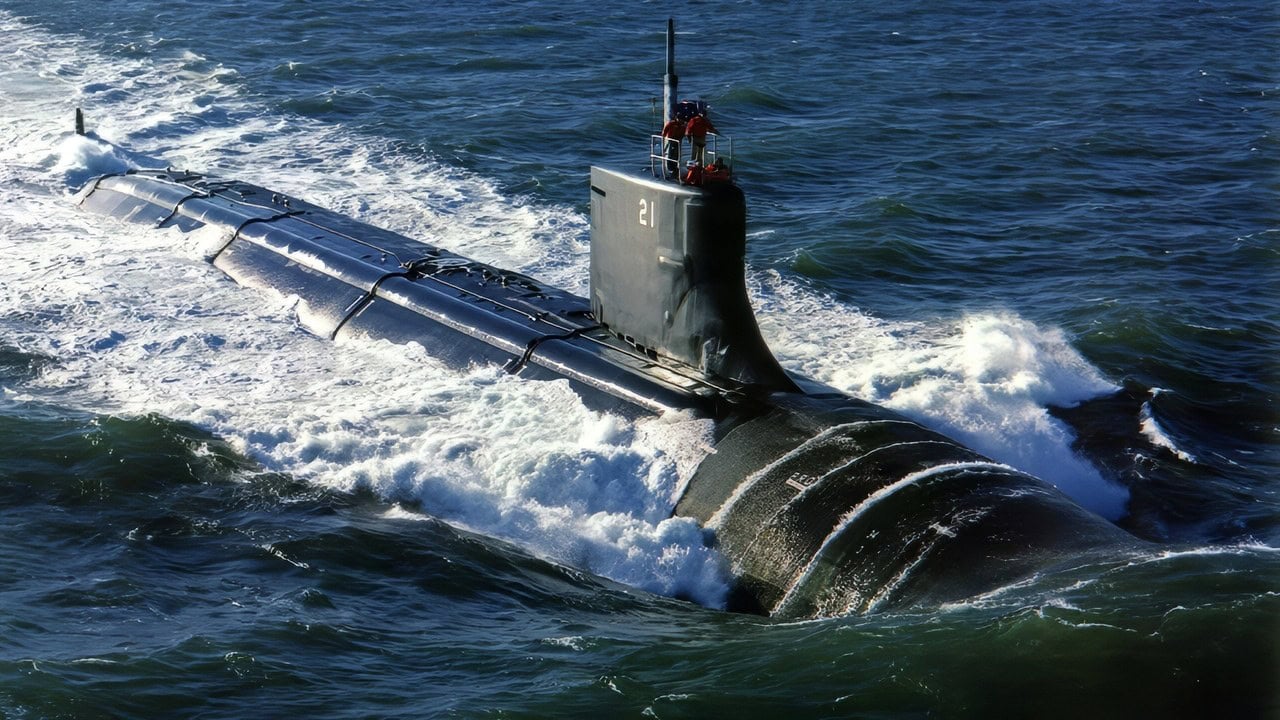
The nation’s newest and most advanced attack submarine Seawolf (SSN 21) puts to sea in the Narragansett Bay operating area for her first at-sea trial operations on July 3, 1996. Sea trials include various tests of the Seawolf propulsion systems and the first underway submergence of the submarine. The Seawolf represents the Navy’s most advanced quieting technology, weaponry, tactical capability and communications. Seawolf is scheduled to be delivered to the Navy and commissioned this fall. U.S. Navy photo courtesy of General Dynamics.

(August 16, 2006) – USS Jimmy Carter (SSN 23) sits moored in the Magnetic Silencing Facility at Naval Base Kitsap Bangor Aug 16 for her first ìdepermingî treatment. The deperming process reduces a ships electromagnetic signature as she travels through the water. U.S. Navy Photograph by MCCM(AW) Jerry McLain (Released)
That doctrine deserves attention on its own. China did not build a small number of exquisite boats to hunt American submarines in the open ocean, the game the US Navy has played since the Cold War. It built a production line of missile carriers designed to make the waters of the Western Pacific lethal for surface fleets. The boats do not need to match a Virginia-class submarine in a duel to do that job. They need to exist in numbers, carry full magazines, and survive long enough to shoot, and the production rate says Beijing understands exactly that arithmetic.
Bohai Shipyard: Three Halls, Six Hulls At Once
The facility behind the surge is the story under the story. The program analysis of Bohai’s expanded complex spells out the capacity: three parallel assembly lines, each long enough for two boats, allowing six hulls to be assembled simultaneously, which, on a nominal two-year assembly cycle, could sustain roughly two Type 095 attack submarines and one Type 096 ballistic-missile submarine every year.
The same analysis draws the uncomfortable conclusion: a facility of that size is inconsistent with the modest fleet estimates Western planners long assumed, and nobody builds an industrial complex like that for a couple of years of work. Hot production lines, as America’s own destroyer program demonstrated, are hard to turn off.
Set that against the historic pattern of underestimating Chinese output — the fighter estimates that doubled in two years, the warship tonnage that outbuilt every projection — and the prudent assumption is that the published submarine numbers are floors, not ceilings.
The Type 096 And The Sea-Based Deterrent
The strategic layer rides on top. China’s six Type 094 Jin-class boats already conduct deterrent patrols carrying JL-3 missiles whose reported range puts the continental United States within reach from waters near China, giving Beijing a functioning, if imperfect, sea-based nuclear leg.
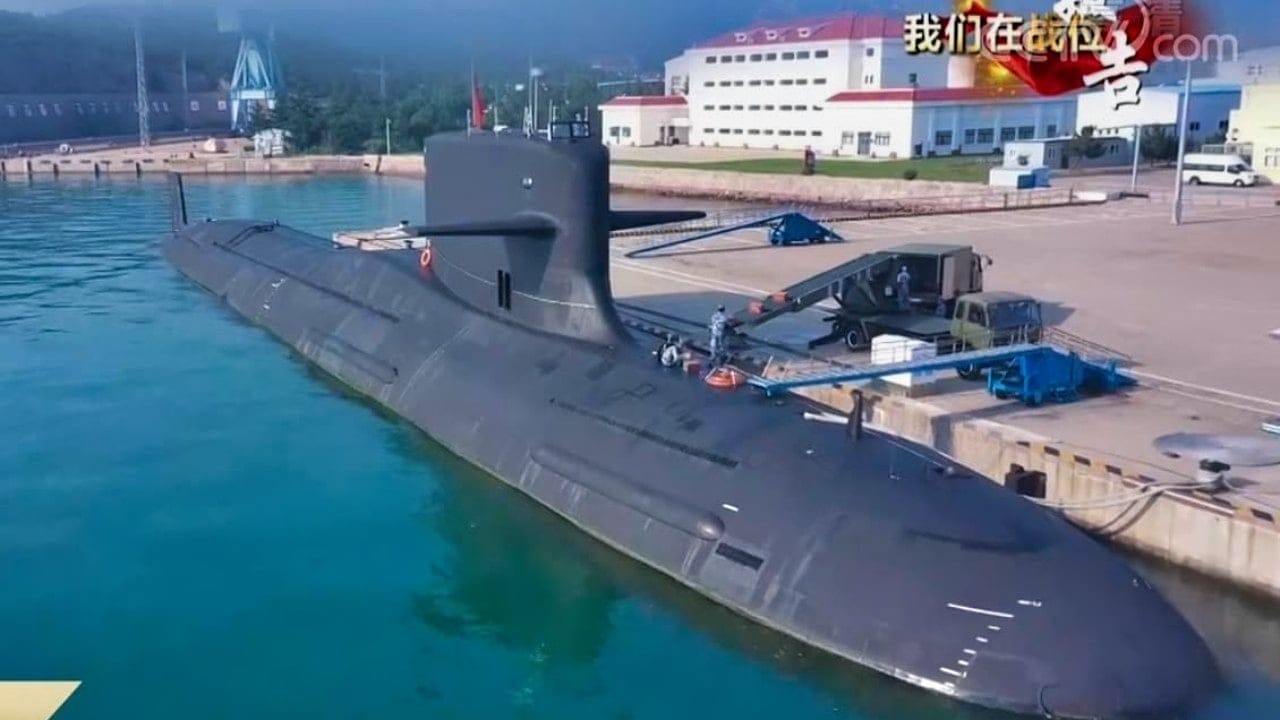
Type 093B Submarine from China. Image Credit: Screengrab.
The Type 096 behind it is expected to be the genuine article: a larger boat potentially featuring up to 24 missile tubes, advanced propulsion, and acoustic performance approaching modern Western standards, the platform that would finally give China an assured-retaliation force the US Navy cannot confidently hold at risk. A survivable Chinese second strike changes nuclear stability calculations across the board, and it changes conventional planning too, because a president weighing intervention over Taiwan faces a different decision when Beijing’s deterrent cannot be neutralized in the opening hours.
The February launch made the 096 timeline more concrete, since the new SSBN is expected to share the Type 095’s hull lineage and the same Bohai halls. The deterrent is not a separate, distant program. It is the next product on a line that is already running.
The American Ledger: 1.3 Boats A Year And A Promise For 2032
Now place the American side of the balance next to it, using the government’s own numbers. The Congressional Research Service reports that Virginia-class production has never reached 2.0 boats per year, and since 2022 has run at roughly 1.1 to 1.2, creating a growing backlog of submarines bought but not built, at about $5 billion per boat.
The Chief of Naval Operations told appropriators last month that the industrial base will reach the required two-per-year rate by 2032 — a target that has slipped repeatedly, having been promised for 2028 only three years ago. The attack submarine fleet already sits 17 boats below the Navy’s long-stated requirement of 66; the AUKUS commitment obligates the sale of Virginias to Australia from that same strained inventory; and the next-generation American attack submarine, SSN(X), has slipped to the early 2040s.

The Virginia-class attack submarine Pre-commissioning Unit (PCU) John Warner (SSN 785) is moved to Newport News Shipbuilding’s floating dry dock in preparation for the Sept. 6 christening. A team of shipbuilders spent about eight hours to move the submarine from the facility where it was assembled to the dock. (U.S. Navy photo courtesy of Huntington Ingalls Industries by John Whalen/Released)

The USS Constitution sails past the Virginia-class nuclear-powered fast-attack submarine USS Massachusetts (SSN 798) during Massachusetts’ commissioning in Boston, on March 28th, 2026. Massachusetts is the newest fast-attack submarine and the fifth U.S. Navy vessel to bear the name. (U.S. Navy photo by Mass Communication Specialist 2nd Class Lucas J. Hastings)
The repair side of the ledger is no better, as this column detailed with the USS Connecticut: five years and $80 million to return one damaged Seawolf to service, in a public shipyard system drowning in backlogged maintenance. The comparison lands hard. In the time America repaired one submarine, Bohai launched seven or eight new ones and broke out an entirely new class. Both navies know how to do the math.
What Still Favors America Under The Sea
The honest counterweights are substantial, and they keep this from being a panic piece. Quieting is the most unforgiving discipline in naval engineering, the product of decades of incremental mastery in machinery isolation, propulsor design, and hull treatments, and the consensus remains that Chinese boats trail American ones meaningfully — the Type 095’s improvements are assessed from satellite photos of its exterior, not measured at sea.
American crews carry generations of operational experience in waters that Chinese submariners are only beginning to learn. The undersea balance also rests on an architecture China cannot quickly replicate: the seabed sensor networks descended from SOSUS, maritime patrol aircraft, and allied anti-submarine forces from Japan to Australia that turn the first island chain into instrumented water. And the fleet counts themselves are satellite-derived assessments of a deliberately opaque program, deserving the same skepticism in both directions.
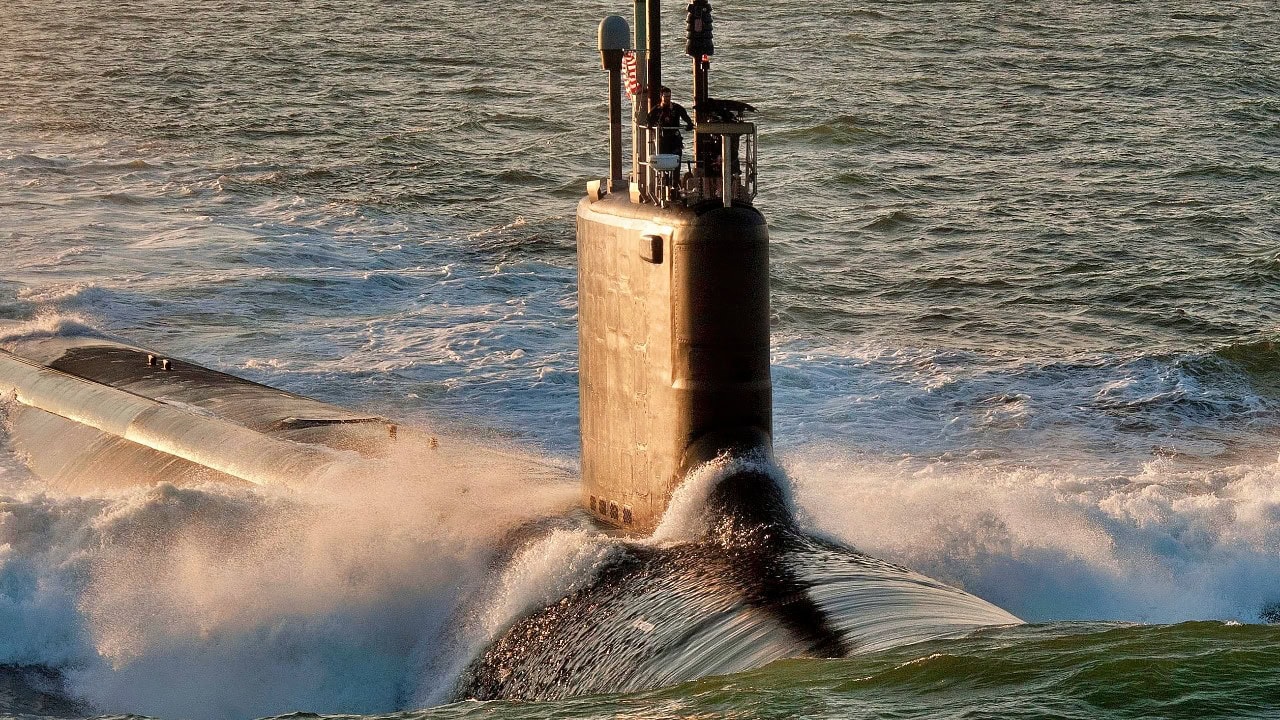
U.S. Navy Virginia-Class Submarine.
All of that is real, and none of it is permanent. The American undersea advantage was built by an industrial base that no longer exists at its old scale, and it is being rented out year by year while the replacement capacity struggles toward a 2032 promise.
China’s nuclear submarine force was a punchline twenty years ago, is the world’s second-largest today, and is backed by the largest dedicated submarine factory ever photographed. The United States still owns the deep. The question the Bohai satellite keeps asking is how long ownership survives a competition in which one side builds two boats a year in a bad year, and the other side calls two boats a year a goal for the next decade.
About the Author: Harry J. Kazianis
Harry J. Kazianis (@Grecianformula) was the former Senior Director of National Security Affairs at the Center for the National Interest (CFTNI), a foreign policy think tank founded by Richard Nixon based in Washington, DC. Harry has over a decade of experience in think tanks and national security publishing. His ideas have been published in the NY Times, The Washington Post, The Wall Street Journal, CNN, and many other outlets worldwide. He has held positions at CSIS, the Heritage Foundation, the University of Nottingham, and several other institutions related to national security research and studies. He is the former Executive Editor of the National Interest and the Diplomat. He holds a Master’s degree focusing on international affairs from Harvard University.