Summary and Key Points: In the waters off Florida in early 2015, a French nuclear attack submarine named Saphir — a 1970s-era Rubis-class boat, the smallest nuclear attack sub in service anywhere — threaded through the cruisers, destroyers, and helicopters screening the USS Theodore Roosevelt and fired simulated torpedoes into the aircraft carrier.
-A boat a fraction of the carrier’s size and cost beats all of it. A decade earlier, a cheap Swedish diesel boat had done the same to the USS Ronald Reagan — and the pattern those exercises revealed is now pointing directly at China’s fast-growing fleet of ultra-quiet submarines.
A Cheap, Aging French Submarine Slipped Inside A U.S. Carrier’s Screen And “Sank” It — And The Lesson Still Haunts The Navy
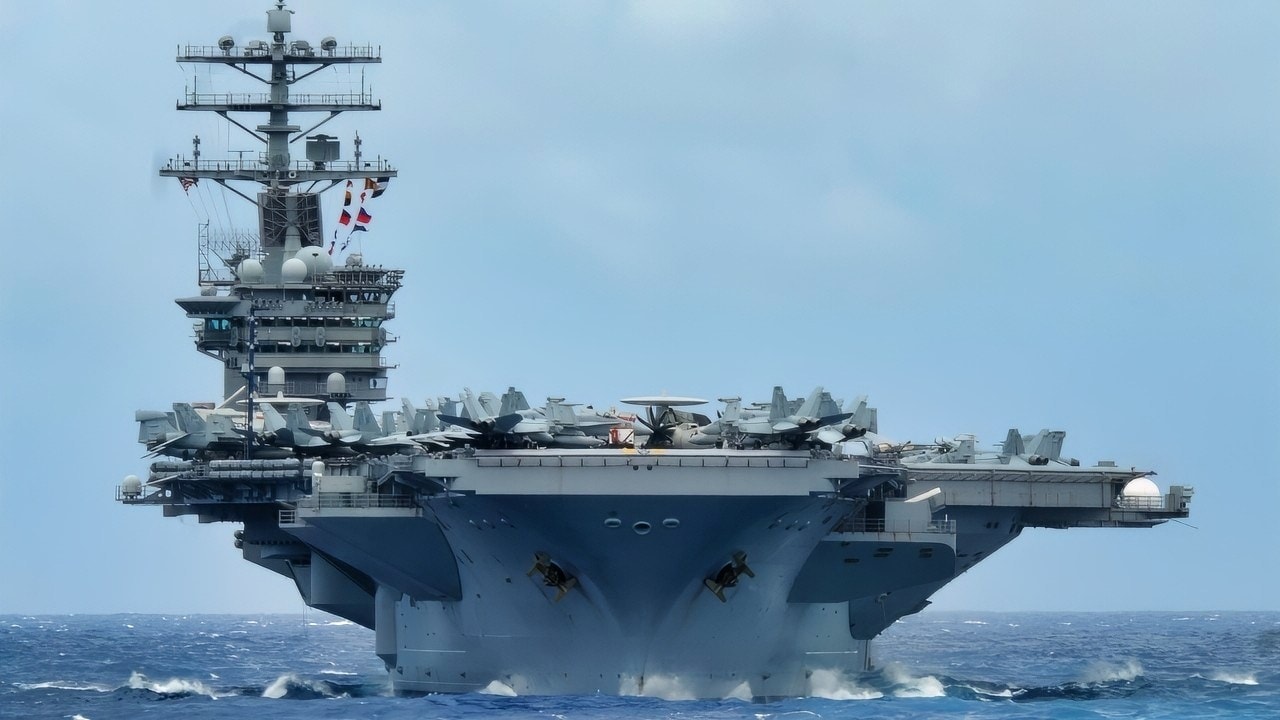
(March 23, 2023) Nimitz-class aircraft carrier USS Theodore Roosevelt (CVN 71) returns to Naval Air Station North Island following a regularly-scheduled maintenance availability and completion of sea trials, March 23. The ship changed its homeport from Bremerton to San Diego after completing an 18-month docking planned incremental availability in Bremerton, Washington, during which the ship received extensive restorations and upgrades to support the F-35C Lightning II, E-2D Advanced Hawkeye, and CMV-22B Osprey, as well as future platforms such as the MQ-25 Stingray unmanned aircraft system. (U.S. Navy photo by Mass Communication Specialist 2nd Class Keenan Daniels)
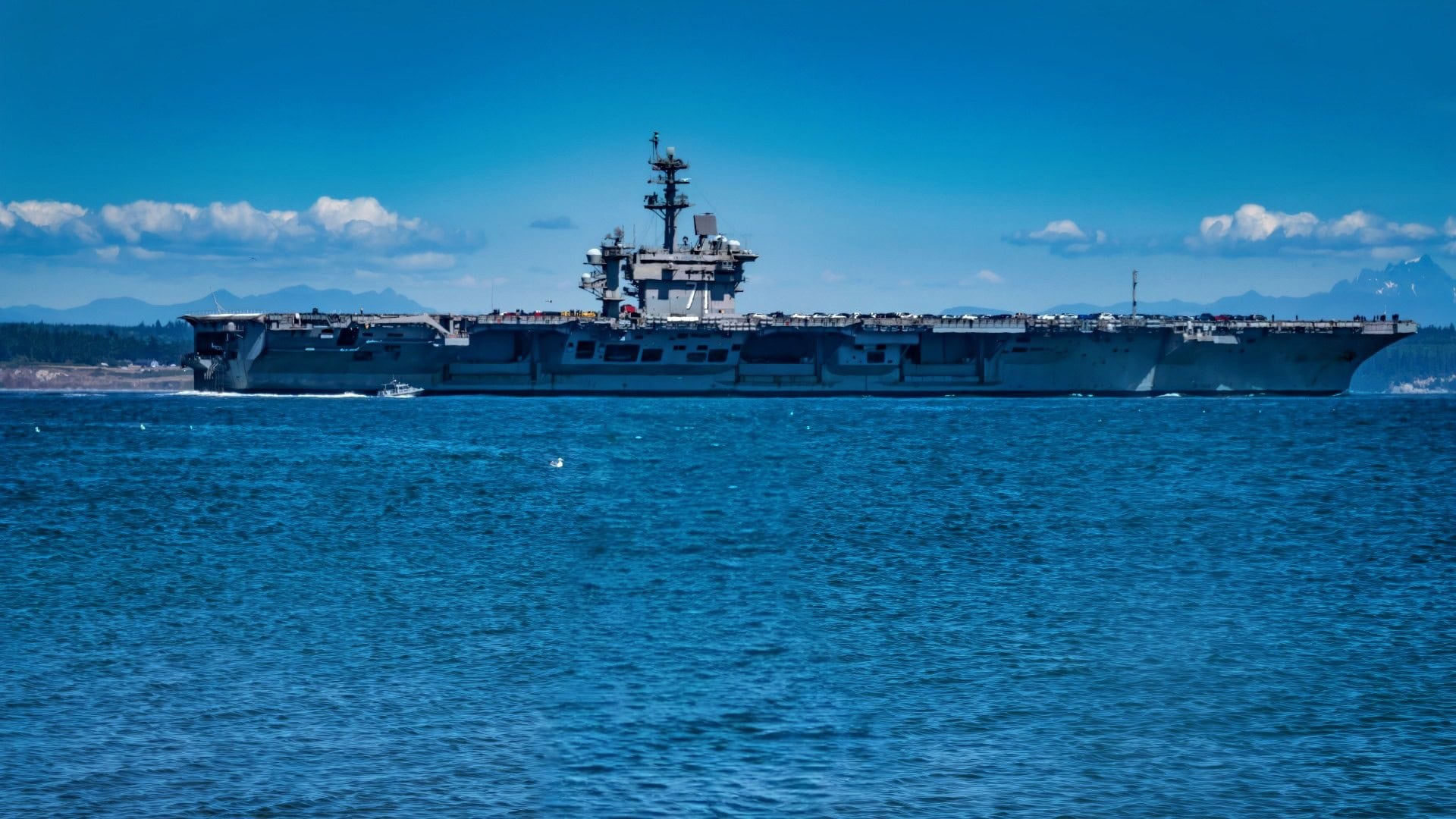
Aircraft carrier USS Theodore Roosevelt (CVN 71) passes Fort Worden before its arrival at Naval Base Kitsap in Bremerton, Washington, July 22, 2021.
In the waters off Florida in early 2015, a French nuclear attack submarine named Saphir threaded its way through the layered defenses of one of the most powerful naval formations on earth and fired simulated torpedoes into the USS Theodore Roosevelt. Saphir was a Rubis-class boat, a design dating to the 1970s and the smallest nuclear-powered attack submarine in operational service anywhere in the world.
The Roosevelt was a Nimitz-class supercarrier, a floating airfield carrying thousands of sailors and an air wing capable of projecting American power across a continent, screened by cruisers, destroyers, helicopters, and a nuclear attack submarine of its own. The little French boat, a fraction of the carrier’s size and a small fraction of its cost, beat all of it. That asymmetry is the whole point, and it is why a decade-old war game still unsettles naval planners.
What The Exercise Actually Showed
The episode is documented because the French Navy reported it to the world. It was the French Ministry of Defense, not the U.S. Navy, that published the report describing how one of its Rubis-class submarines had killed the American carrier, in an early March 2015 post detailing a pre-deployment exercise off Florida with the Theodore Roosevelt Aircraft Carrier Strike Group. For the first phase, the submarine operated as a friendly asset supporting the carrier.
Then its role flipped. Saphir joined the opposing force, tasked with hunting the carrier, and over the course of the drill, it located the Roosevelt, slipped undetected inside the protective screen of escorts, and reached a firing position from which it could attack.
According to the French account, when the scenario escalated to a simulated shooting war, and Saphir was cleared to engage, the submarine notionally “sank” the carrier and a number of its escorts before being detected.
The post did not survive long. It was quietly removed from the French Navy’s site without explanation, though it had already been captured and reproduced elsewhere, which is how the details entered the public record.
The carrier strike group involved was a real and formidable one, including a Ticonderoga-class guided-missile cruiser and Arleigh Burke-class destroyers, the kind of escorts whose sensors and weapons exist precisely to keep submarines away from the ship they protect.
A note on proportion matters here, because the real lesson does not require exaggeration. In an actual engagement, a torpedo or two would have damaged the Roosevelt rather than guaranteed its loss, and a single carrier of that size can absorb a hit and potentially keep flying aircraft.
The escorts notionally struck might have been disabled rather than destroyed. But the meaningful fact is not the body count. It is that a small, old submarine got into a firing position against the most valuable ship in the formation and was not caught until after it had already shot. In undersea warfare, getting that first shot off undetected is the entire game.
Not A Fluke — A Pattern
If Saphir were an isolated embarrassment, it could be dismissed as a bad day for one strike group. It is not isolated. A decade earlier, the same lesson had been delivered to the U.S. Navy in even starker terms, and by an even cheaper boat.
In 2005, the U.S. Navy leased the Swedish submarine HSwMS Gotland and its crew to serve as an opposing-force training target off the coast of California. The Gotland was a diesel-electric boat displacing roughly 1,600 tons, built for around $100 million, equipped with an air-independent propulsion system that let it run submerged and silent for far longer than a conventional diesel boat. Pitted against the carrier USS Ronald Reagan and its full screen of escorts, the Gotland repeatedly maneuvered into firing position and executed simulated torpedo attacks on the carrier without ever being detected. The results were alarming enough that the Navy extended the lease, keeping the Swedish boat and its crew in California for two years specifically to learn how to hunt something that quiet.
The through-line connecting the two episodes is what the Gotland exercise revealed about the limits of American sensors. The submarine was able to elude the helicopters, sonar, and surface-warship sensors of the strike group, finding the quiet space and exploiting the gaps in submarine detection. The carrier’s defenses had been built during the Cold War to counter large, fast, noisy Soviet nuclear submarines. A small, patient, ultra-quiet boat was a different kind of problem, and it was a problem the strike group could not reliably solve.
Why One Quiet Hull Can Beat A Fortress
The reason these results keep recurring lies in the physics of hunting submarines, which is far harder than the public imagines. Anti-submarine warfare is probabilistic rather than absolute. The ocean is opaque to most sensors, layered with changing temperature and salinity gradients that bend and scatter sound, and a submarine that stays slow and quiet gives a hunter very little to find. A carrier strike group throws an enormous amount of sensing at the problem, with sonar on its escorts, dipping and towed arrays, maritime patrol aircraft, and helicopters, but every one of those tools is fighting the same difficult medium.
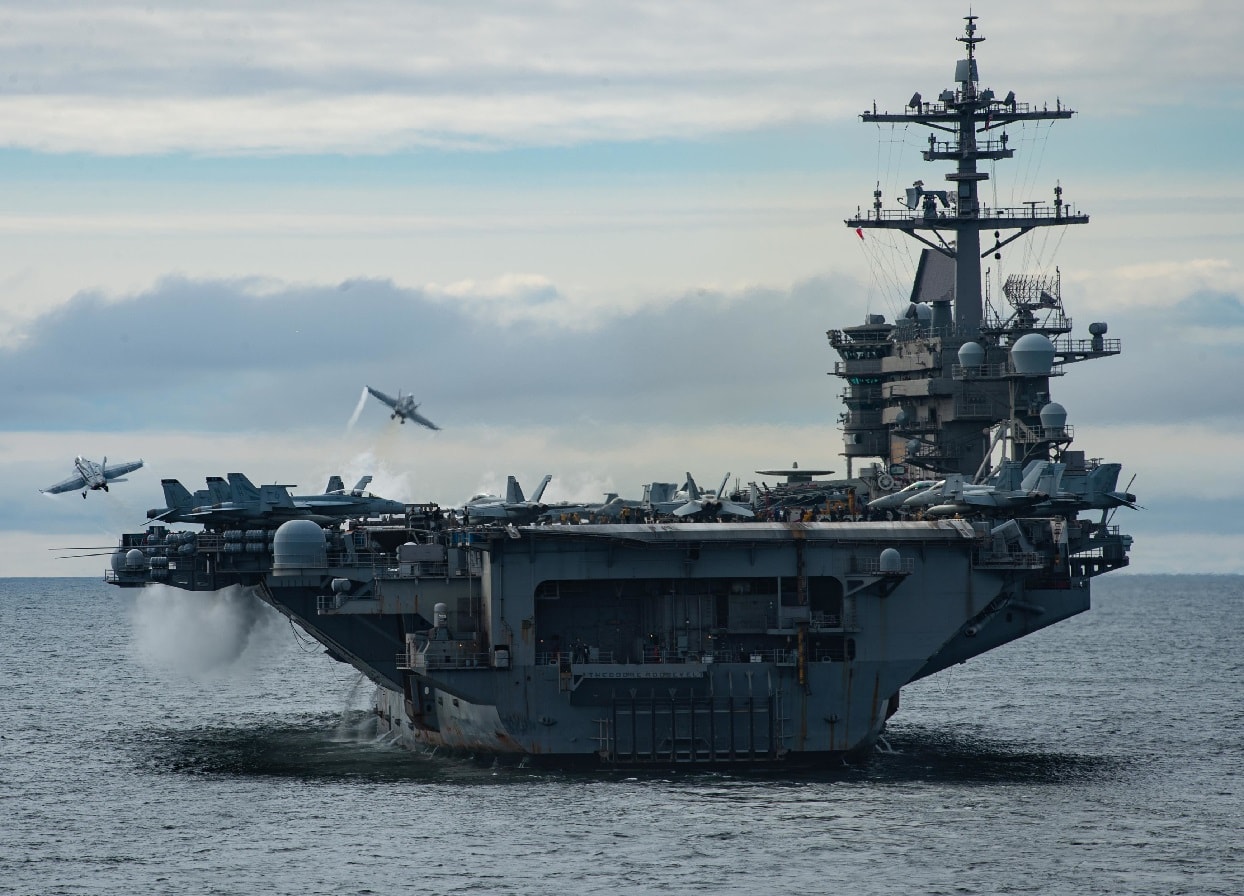
PACIFIC OCEAN (April 29, 2021) Two F/A-18 Super Hornets assigned to Carrier Air Wing (CVW) 11 launch from the flight deck of the aircraft carrier USS Theodore Roosevelt (CVN 71), April 29, 2021. The Theodore Roosevelt Carrier Strike Group is on a scheduled deployment conducting routine operations in U.S. 3rd Fleet. (U.S. Navy photo by Mass Communication Specialist 3rd Class Erik Melgar) 210429-N-XX200-4059
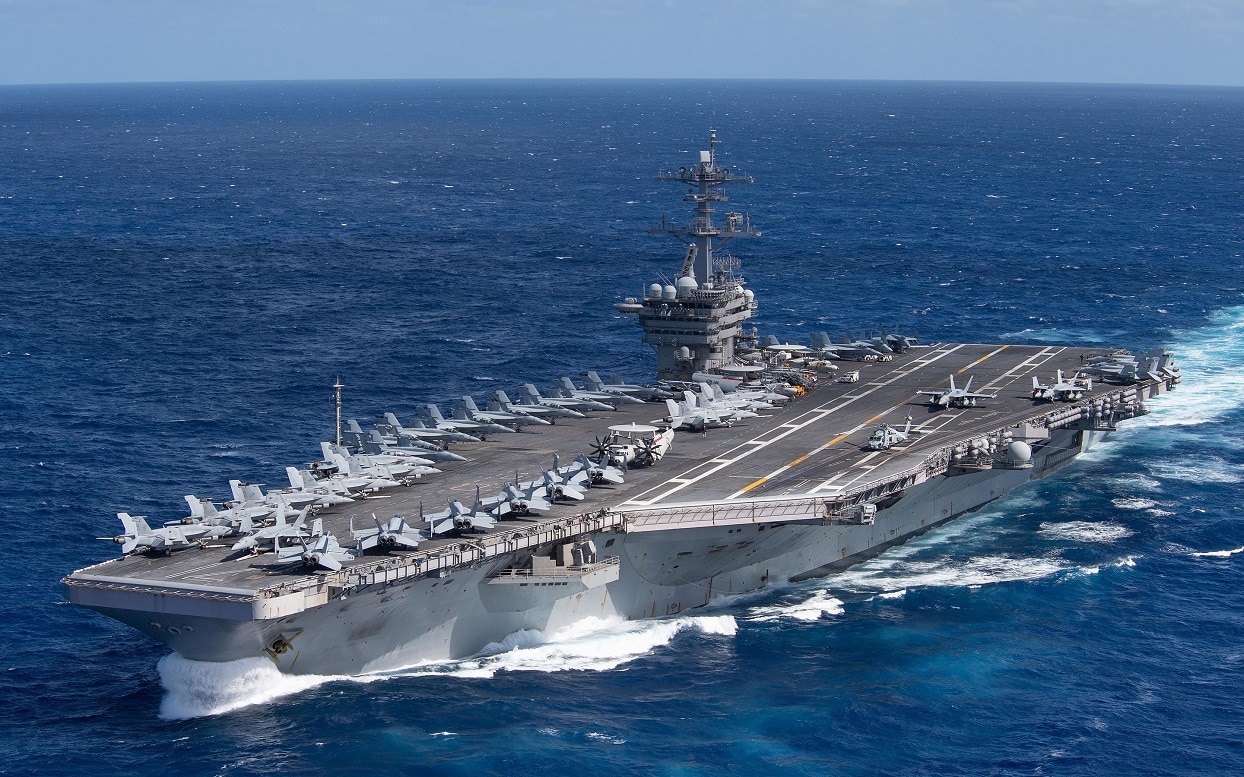
200125-N-LH674-1073 PACIFIC OCEAN (Jan. 25, 2020) The aircraft carrier USS Theodore Roosevelt (CVN 71) transits the Pacific Ocean Jan. 25, 2020. The Theodore Roosevelt Carrier Strike Group is on a scheduled deployment to the Indo-Pacific. (U.S. Navy photo by Mass Communication Specialist Seaman Kaylianna Genier)

PACIFIC OCEAN (April 29, 2021) Two F/A-18 Super Hornets assigned to Carrier Air Wing (CVW) 11 launch from the flight deck of the aircraft carrier USS Theodore Roosevelt (CVN 71), April 29, 2021. The Theodore Roosevelt Carrier Strike Group is on a scheduled deployment conducting routine operations in U.S. 3rd Fleet. (U.S. Navy photo by Mass Communication Specialist 3rd Class Erik Melgar) 210429-N-XX200-4059
Quiet propulsion is what tips the contest toward the hunter. Modern diesel-electric boats running on battery power, and air-independent propulsion systems like the Stirling engine aboard the Gotland, let a submarine loiter submerged for days or weeks without the noisy machinery or the need to surface that once gave such boats away. A small nuclear boat like Saphir, designed for stealth over raw speed, achieves a similar end.
The result is a hull that can sit in ambush, let the strike group come to it, and shoot from inside the screen before the defenders ever localize it. A carrier’s layered defenses are real and powerful, but they are defenses against detection failures, and detection is exactly what a quiet submarine is built to defeat.
The Reason This Aircraft Carrier History Now Points At China
For years the carrier-versus-submarine lesson was an intramural concern, taught by allied boats in controlled exercises. That is no longer the case, because the country building quiet submarines fastest is the one most likely to use them against the U.S. Navy.
China’s undersea force has expanded into exactly the kind of threat the Saphir and Gotland exercises previewed. More than half of the roughly 66 submarines the Chinese navy operates are conventionally powered, including more than 20 newer Yuan-class diesel-electric boats, the same air-independent, ultra-quiet category that gave American escorts so much trouble. The Pentagon projects the fleet will grow to more than 75 submarines by 2030.
Many carry anti-ship cruise missiles, and the newer Yuan-class boats are coated in anechoic tiles and optimized for precisely the long, silent patrols that make a submarine so hard to find.
The trajectory is the worrying part. The commander of the Office of Naval Intelligence testified in early 2026 that by 2040 China’s undersea forces may credibly challenge U.S. regional maritime dominance, complicating crisis response and power projection, with up to half of a projected 80-boat attack fleet expected to be nuclear-powered. Congressional researchers track the same buildout, noting the PLA Navy’s submarine force is expected to grow to 80 units by 2035 as Beijing expands its submarine construction capacity. These boats would operate in the shallow, acoustically chaotic waters of the first island chain, the South China Sea, and the approaches to Taiwan, the kind of cluttered littoral environment that degrades a carrier’s sensors and favors an ambusher.
That geography has reshaped how analysts read the old exercises. Rather than proof that the supercarrier is obsolete, the Gotland result is increasingly framed as a warning about littoral compression, the way shallow, complex waters can neutralize the blue-water advantages a carrier enjoys in the open ocean.
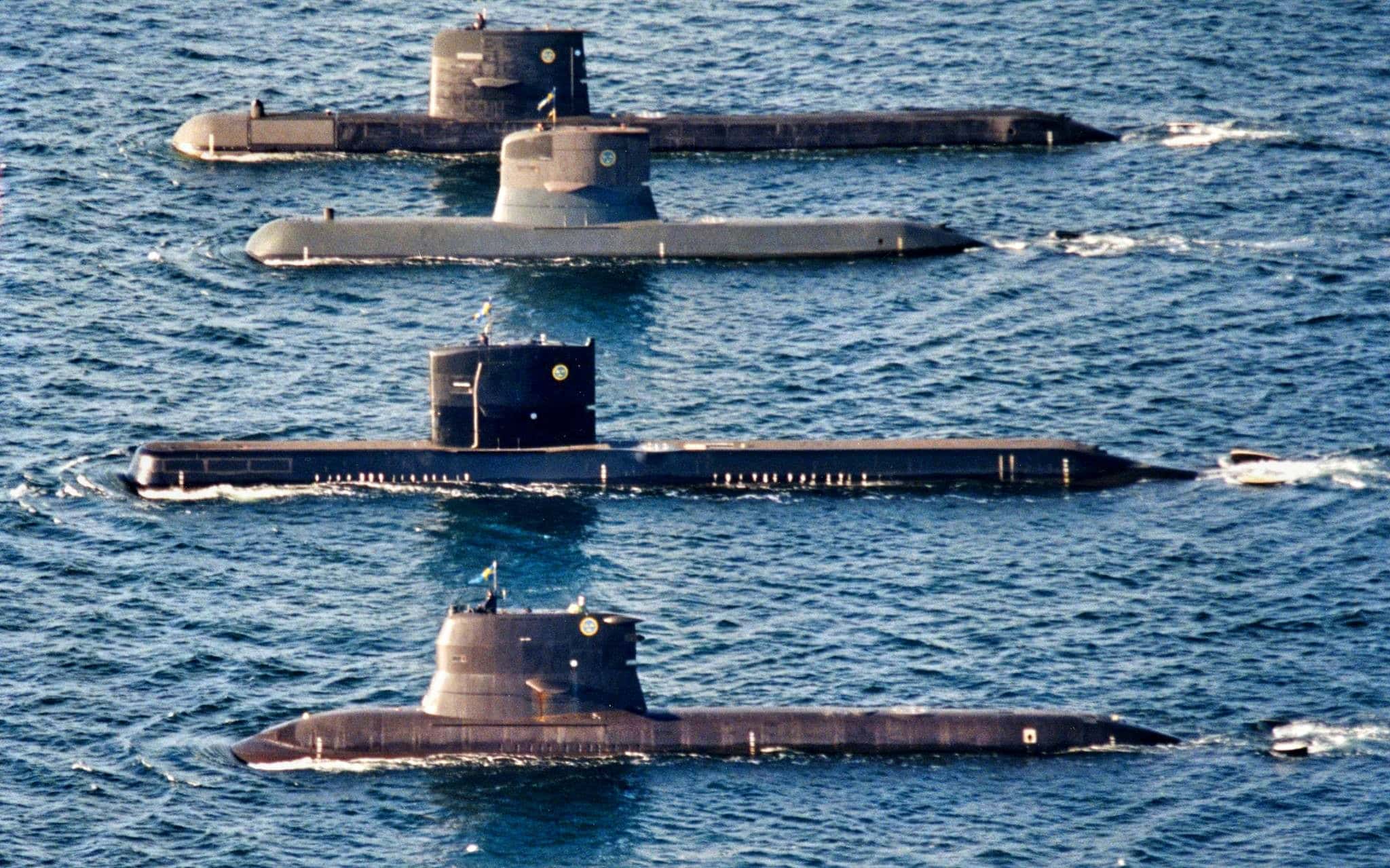
Gotland-Class Submarines and more from Sweden. Image Credit: Swedish Navy.
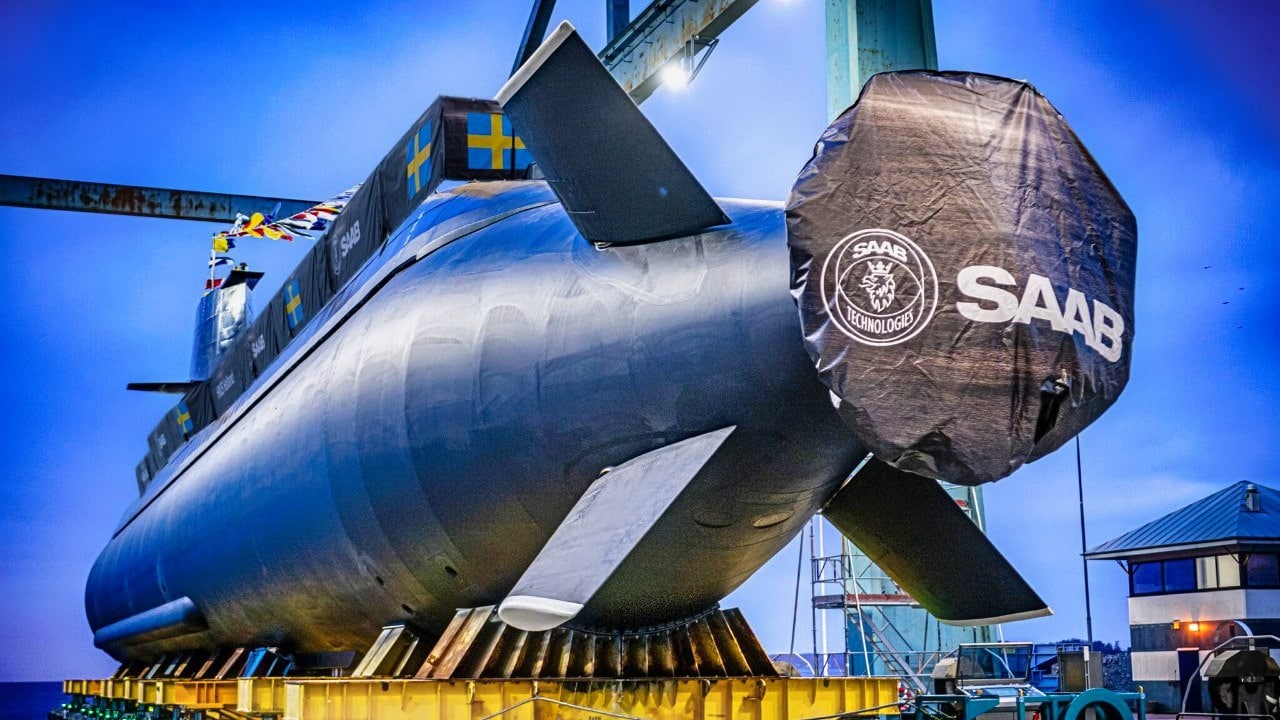
Gotland-Class. Image Credit: Saab.
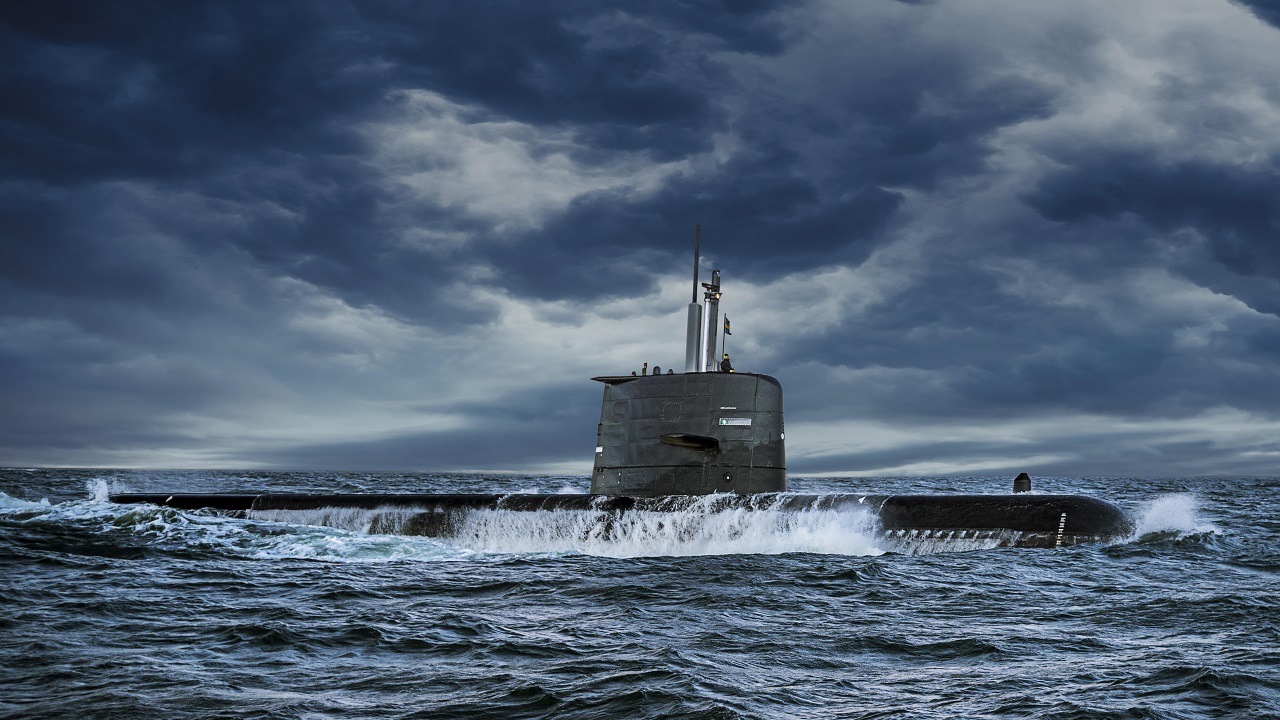
Gotland-Class. Image Credit: Saab.
The supercarrier is not dead. It remains the most flexible instrument of power projection ever built, and surface fleets are arguably becoming easier to track at range while undersea threats remain stubbornly hard to localize. But the central assumption that a carrier strike group is a sanctuary its enemies cannot reach has been tested repeatedly, by a Swedish diesel boat and an aging French nuclear one, and it has failed each time.
Saphir’s run inside the Roosevelt’s screen was a war game with no casualties, and no wreckage, a line on an after-action report the French Navy thought better of publicizing. Its significance is what it rehearsed.
A cheap, small, decades-old submarine did to a multibillion-dollar supercarrier exactly what a Chinese boat would be asked to do in a Pacific war, and it did it against defenses designed by the world’s most capable navy.
The exercises were built to reveal that seam before an adversary could exploit it. Whether the lesson has been fully absorbed is a question that will be answered, if it ever is, in far less forgiving water than the warm Atlantic off Florida.
About the Author: Harry J. Kazianis
Harry J. Kazianis (@Grecianformula) was the former Senior Director of National Security Affairs at the Center for the National Interest (CFTNI), a foreign policy think tank founded by Richard Nixon based in Washington, DC. Harry has over a decade of experience in think tanks and national security publishing. His ideas have been published in the NY Times, The Washington Post, The Wall Street Journal, CNN, and many other outlets worldwide. He has held positions at CSIS, the Heritage Foundation, the University of Nottingham, and several other institutions related to national security research and studies. He is the former Executive Editor of the National Interest and the Diplomat. He holds a Master’s degree focusing on international affairs from Harvard University.